

9 Drought‑Tolerant Landscaping Ideas: California Home Edition [2025]

Drought-tolerant landscaping in California isn’t just a trendy idea – it’s a necessity. And if you live in California like us, you know the struggle first-hand. Hot summers, rising water bills, and stricter drought restrictions are the norm.
But that doesn’t mean your yard has to go dry, dusty or boring. There are plenty of unique drought-tolerant landscaping ideas to swoon over!
In fact, many of California’s native plants are naturally drought-resistant. They help increase biodiversity, conserve water, resist fire and sequester carbon while adding beauty to your front yard, backyard or side yard.
What to Expect in this Article for Garden Inspiration
This article contains a diverse, curated list of sustainable drought-tolerant landscape ideas tailor-made for residential yards in California. These ideas were meticulously designed by native landscape designers at Water Efficient Gardens for single family homes and have been tried and tested.
Our low-water landscape inspiration blends curb appeal, climate resilience, and year‑round beauty. In short, these drought-tolerant backyard and front yard garden ideas are sustainable and actually work!
Why Use Our Drought-Tolerant Landscaping Ideas?
At Water Efficient Gardens (WEG), we’ve spent 10+ years designing drought-tolerant landscapes across California — from the Bay Area to San Diego. Our team has helped convert more than 150,000 square feet of lawns to native, drought-tolerant gardens and have saved 3 million+ gallons of water.
We also design drought-resistant landscape ideas according to local landscape rebate program guidelines to help homeowners qualify for rebates. As a proud member of the California Water Efficiency Partnership, we stand with California’s goal to conserve water across the state.
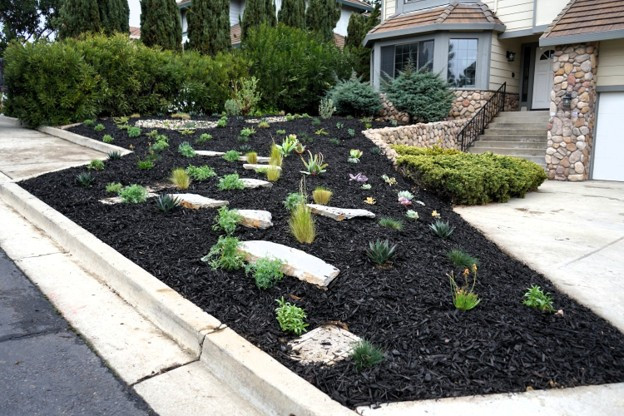
One of our installed drought-tolerant garden designs in Hayward, California
Importance of Customizing a Landscaping Idea for Your Specific Yard
Each one of these drought-tolerant landscaping ideas was created for specific conditions and parameters of a client’s yard.
If you like one of these designs, contact Water Efficient Gardens! We can come up with a design for your specific yard, taking into account the specific traits you like about the drought-tolerant landscaping photo that caught your eye.
Here’s why it’s important to get a custom drought-friendly landscape design:
Maximizes water savings – We match plants and irrigation systems to your yard’s microclimates so you use the least water possible while keeping your landscape thriving.
Fits your HOA or city requirements – We ensure your design complies with local codes, rebate program guidelines, and community aesthetics.
Optimizes for your soil and sunlight – Every yard has unique soil composition, drainage, and sun exposure patterns that affect plant health.
Highlights the features you love – Whether it’s vibrant seasonal blooms, a pollinator-friendly habitat, or a clean, modern look, we tailor the design to your aesthetic goals.
Addresses site-specific challenges – We design with slopes, shade, privacy needs, fire risk or existing hardscape in mind so everything works together seamlessly.
Supports long-term sustainability – Our designs use native and climate-appropriate plants to reduce maintenance, water use, and chemical inputs year after year.
What is Drought-Tolerant Landscaping?
Before we present our tried-and-tested ideas for drought-tolerant landscaping, a definition: What is considered drought-tolerant landscaping? Drought-tolerant landscaping uses plants, design elements, and irrigation techniques that reduce the need for supplemental water. It works by:
Choosing plants adapted to California’s dry summers
Using mulch and groundcover to retain soil moisture
Grouping plants by water needs (a technique called “hydrozoning”)
Installing efficient irrigation systems like drip lines
Reducing or replacing lawn, which requires far more water than other plantings
The result? A beautiful, livable yard that can thrive even in extreme drought — with less maintenance and lower water bills.
TIP: Try our Water Savings Calculator to see how much water your current landscape is using — and how much you could save.
Drought-Tolerant Landscaping: Water-Wise vs. Xeriscaping
Drought-tolerant landscaping includes a range of strategies—most notably xeriscaping and water-wise gardening. Both approaches focus on minimizing water use, but water-wise gardening is typically more flexible and aesthetically diverse.
While xeriscaping often emphasizes arid, minimalist visuals, water-wise design allows for lusher, more colorful plant palettes—especially when native species are used effectively.
Looking for inspiration? These real projects below showcase some of the best xeriscaping ideas California homeowners are using to reduce water use and increase curb appeal.
Drought‑Tolerant Landscaping Ideas for California Homes (All Designed & Tested by Water Efficient Gardens!)
Whether you’re removing resource-heavy turf or starting fresh, these no-lawn landscaping ideas can help you create a vibrant, low-water yard in any California climate.
1. Replace Lawn with Native Plant Islands
A traditional lawn is one of the thirstiest landscape choices, often needing 40+ inches of water annually. Replacing it with native plant islands dramatically reduces water needs.
Native grasses like Muhlenbergia rigens and shrubs like Artemisia californica are adapted to California’s wet winters and dry summers — meaning they can survive on rainfall alone once established. Replacing turf with native plant clusters drastically reduces water needs.
According to Save Our Water, native plants can reduce water use by 60–80% compared to traditional landscape planting.
What WEG did: a drought-tolerant front yard lush with beautiful native plants
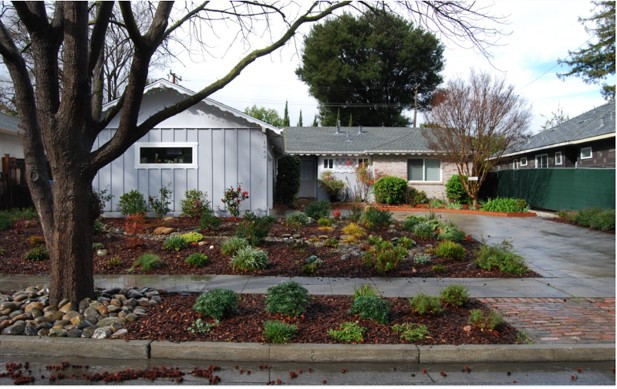
In Nature’s Gem, we removed the client’s thirsty front lawn and replaced it with layered native plant groupings separated by mulch. The result is a colorful, pollinator‑friendly front yard that qualified for a Santa Clara Valley Water District rebate—saving water and earning money back.
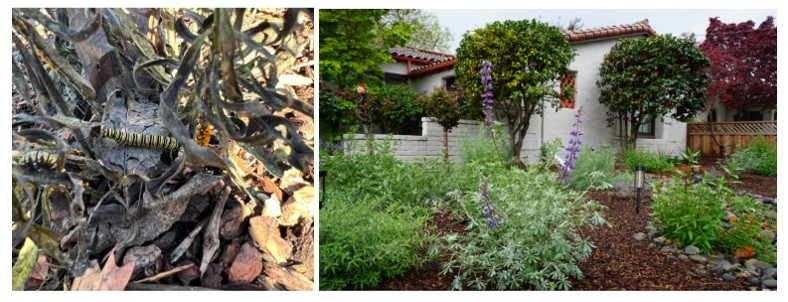
2. Rain Garden in Front Yard with Home‑Scale Swale
Rain gardens capture and absorb stormwater runoff, helping it sink into the soil instead of flowing into storm drains. This recharges groundwater, reduces erosion, and provides moisture to drought-tolerant wetland natives during the rainy season — without extra irrigation.
What WEG did: a drought-tolerant front yard to absorb runoff
In projects like A Native Garden That Looks Great in All Seasons and A Rain Garden, Water Efficient Gardens incorporated natural depressions and flow patterns in the front yard to guide rainwater into planted swales. These subtle features reduce runoff while supporting seasonal bursts of color.
Beautiful garden that’s colorful even in the fall
example of a frontyard rain garden in wet weather (right)
3. Gravel Succulent Oasis with Fire‑Resistant Hardscape
Gravel mulch reflects sunlight, reduces soil evaporation, and deters weeds. Succulents like Dudleya edulis and Aloe striata store water in their leaves, making them perfect for hot inland zones. Paired with stone and DG (decomposed granite), the design is both drought- and fire-resilient.
What WEG did: a bold drought-friendly front yard
In A Southwest Style Garden, we created a bold front yard with boulders, gravel mulch, succulents, and tough perennials. The design reduces water use, discourages weeds, and aligns beautifully with arid SoCal aesthetics.
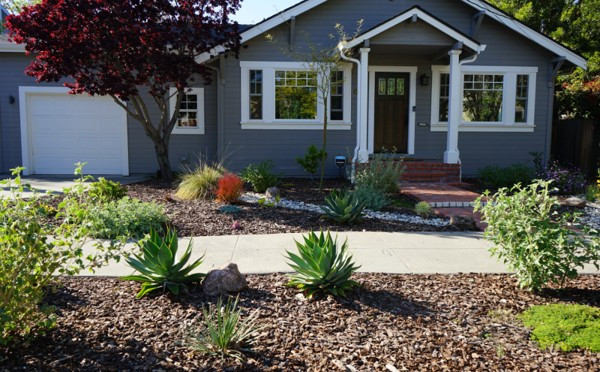
4. Parking‑Strip Pollinator & Succulent Garden
Parking strips (also known as “parkways”—those narrow areas between sidewalk and street—are often overlooked. Unfortunately, narrow curbside strips are hard to irrigate and prone to runoff.
We solved this by installing drought-hardy pollinator plants and low-growing succulents, irrigated with inline drip systems under mulch. These plantings thrive in harsh urban microclimates.
In fact, with the right design, they can become pollinator hotspots that thrive with minimal irrigation. Drought-tolerant plants like Lavandula (lavender) are tough enough to handle reflected heat, compacted soil, and infrequent watering.
Installed with mulch and inline drip irrigation, these strips can bloom with color all summer long—without waste.
What WEG did: a dreamy drought-friendly front yard
In the project “A Purple Dream – From Start to Bloom”, we transformed a lawn-covered front yard and its adjacent parking strip into a blooming lavender walk.
You guessed it: rows of Lavandula were planted along both garden edges, including the parking strip, creating a striking purple corridor that bees love. A simple drip system delivers targeted moisture, making this garden both beautiful and water-smart.
[Insert image of lavender in length of the sidewalk–images on the page are broken]
Bonus story: a walk-friendly and drought-tolerant front yard
We also transformed a front yard to be an eco- and walk-friendly garden oasis, with a richly layered garden that supports walking access, meditative strolling and neighborhood appeal.
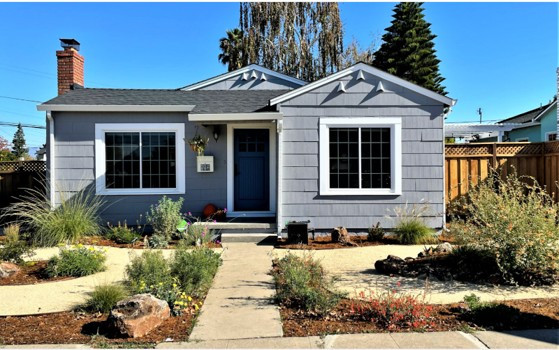
Our client’s drought-tolerant front yard with circular walking paths
5. Fire‑Smart Backyard Hardscape Garden Oasis
In fire-prone zones, landscaping should use non-flammable hardscapes (gravel, DG, stone), widely spaced plants, and low-resin species. Many native California plants are both drought-tolerant and fire-resistant — such as Ceanothus, Arctostaphylos, and native sages.
Fire-resistant landscaping for California homeowners means focusing on plant spacing, non-flammable materials, and native species with low resin content.
What WEG did: drought-tolerant backyard landscaping idea
In "A Backyard That Illuminates at Night", we used open DG spaces, native plant clusters, and warm lighting to create a drought-tolerant backyard that’s both serene and safe.
This garden incorporated several elements including a pergola with a native grape vine with beautiful red foliage in the fall. In addition to the pergola and native plants to attract pollinators, the homeowner also wanted a vegetable bed, fruit trees and a succulent garden installed.
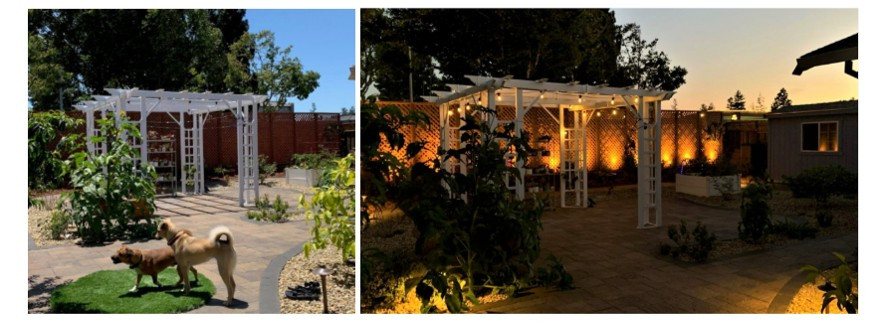
A client’s backyard drought-tolerant garden space for entertaining with happy, safe dogs and low lighting at night
6. Serene Pathway Garden with Bench & Native Understory
Decomposed granite paths with native understory create a walkable, peaceful retreat while using very little water. Fortunately, under the dappled shade of trees, drought-tolerant groundcovers and understory plants can thrive with deep, infrequent watering.
Additionally, mulch and shade from nearby trees help retain soil moisture for native perennials and grasses. Lastly, native bunchgrasses, Heuchera, and Eriogonum can create movement and color without needing full sun or heavy irrigation.
What WEG did: a serene drought-friendly Japanese garden
We built a quiet retreat featuring native plantings and a curved gravel path that leads to a peaceful sitting area. This drought-tolerant foliage works beautifully to mirror a Japanese style native garden structure while reflecting the California landscape.
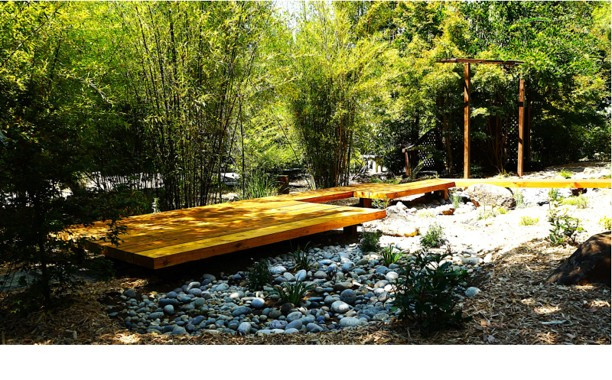
Real example of a drought-tolerant Japanese-style garden we designed for a client
7. Native & Edible Garden Combo
This drought-tolerant landscaping idea is both appetizing and inspiring. Combining edibles–such as fruit trees–with native plants will give you extra reason to wander into your garden.
What WEG did: native plants and fruit trees in a water-wise garden
Unfortunately, fruit trees need some irrigation— but pairing them with drought-tolerant natives, you can retain moisture, reduce competition from weeds, and support pollinators. It’s a water-smart way to grow food.
This is exactly what we did for our client’s lawn-to-garden conversion in San Jose.
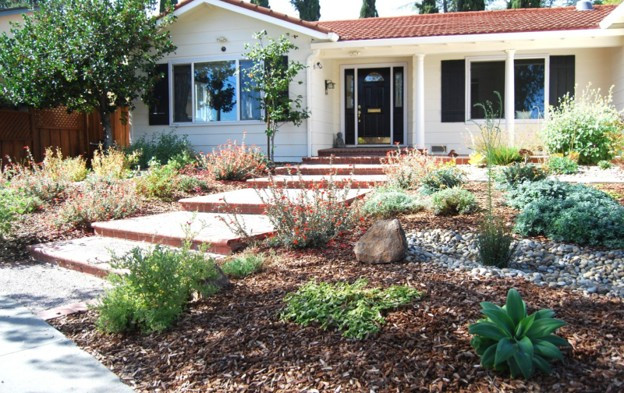
Our client’s drought-tolerant native garden with fruit trees
The native understory shades the soil, suppresses weeds, and creates a more self-sustaining, water-efficient edible garden! Similar to Stanford’s Water-Wise Garden, combining edible plants with drought-tolerant natives helps conserve water, support pollinators, and reduce landscape maintenance.
What WEG did: drought tolerant landscaping idea that supports local habitats
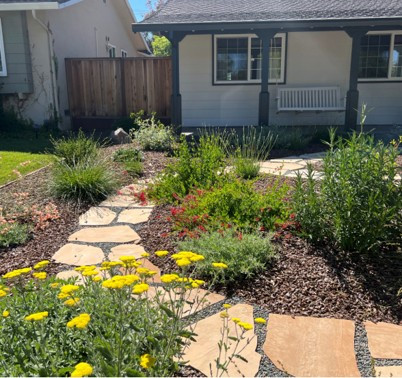
In our "Walk-In Native Landscaping" project, WEG combined pollinator-friendly native plants in a welcoming backyard designed for strolling and sustainability.
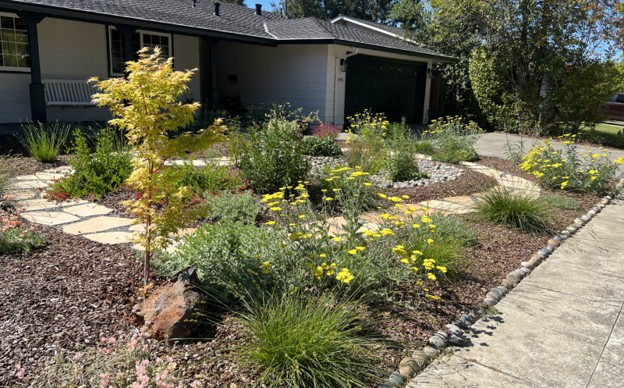
We brought to life this drought-tolerant backyard landscaping idea with flagstone walking paths
8. Dry Riverbed Garden
A dry riverbed garden mimics a natural creek, guiding stormwater flow while enhancing the visual flow. The gently curving stone channel adds structure and movement to the landscape—even when dry.
Paired with drought-tolerant plants, it slows runoff, improves infiltration, and creates a sculptural centerpiece that thrives with little to no irrigation.
What WEG did: Dry riverbed in a drought-tolerant garden
In "A Dry Riverbed Garden", we carved a winding stone bed into the yard and surrounded it with low-water grasses, salvias, and native flowering perennials. The design softens hard lines with natural curves, turning a static yard into a dynamic, rain-ready focal point—blending beauty, function, and California-native resilience.
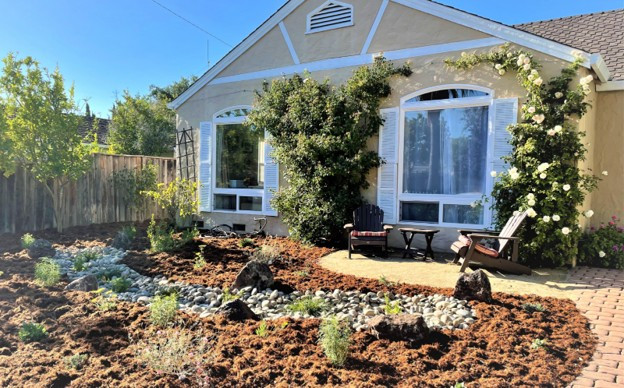
Low-water landscape with a dry riverbed
9. A Tranquil Garden with Pathway and Bench
A well-designed drought-tolerant garden isn’t just about saving water—it can also create moments of calm, beauty, and daily connection.
Replacing turf with native shrubs, groundcover, and mulch creates a resilient foundation. Add a decomposed granite path and a tucked-away bench, and even a small front yard becomes a peaceful, water-wise retreat.
It’s one of the most rewarding sustainable front yard ideas for blending beauty, function, and water savings.
What WEG did:
In this lawn to garden conversion in Sunnyvale, we removed the client’s thirsty lawn and installed a mix of colorful native plants with bark mulch and drip irrigation.
Now, a soft path winds through the garden, leading to a quiet bench nestled in the corner–the perfect garden reading nook or contemplation space. It’s a personal oasis that conserves water, supports pollinators, and brings daily joy to the homeowners.
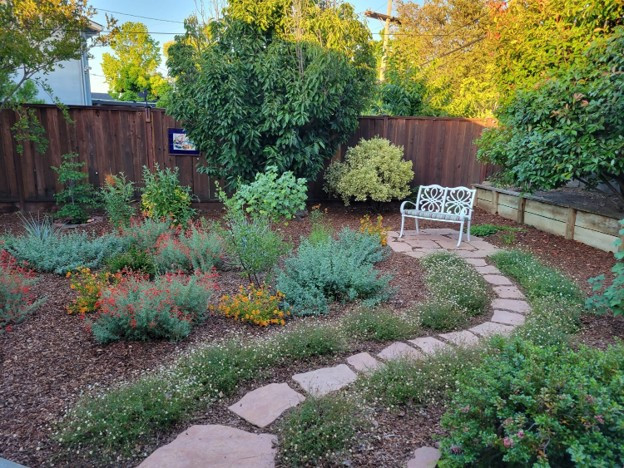
Inspired by this native backyard landscaping idea we designed? We can create a version of it specifically for your property, vision and location.
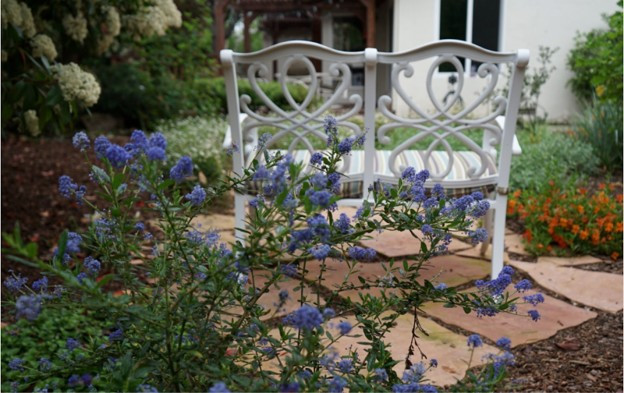
Drought-tolerant garden with a sitting bench surrounded by native plants in a California yard
FAQs for Drought-Tolerant Landscaping
What is the best drought-tolerant landscape design for small yards?
The best drought-tolerant designs for small yards use native shrubs, groundcovers, and mulch to maximize space and minimize watering. Gravel paths and vertical layering add visual interest without extra maintenance, maximize space, minimize watering and add dimension.
How do I make my landscaping drought-proof?
To make your landscaping drought-proof, start by removing lawn, installing drip irrigation, and choosing native plants suited to your microclimate. Mulch or gravel helps retain soil moisture and cut down on evaporation, and plant natives adapted to your microclimate. Use mulch or gravel to lock in moisture.
What are some affordable drought-tolerant ideas for California homes?
The most affordable drought-tolerant ideas start with turf removal, native groundcovers, and mulch.
Are there rebates for drought-tolerant landscaping in California?
Yes, many California cities and water districts offer rebates for turf replacement and drought-tolerant landscaping. WEG’s rebate assistance makes it easy to navigate the application process and maximize your savings. turf replacement and water-wise rebates.
What’s the difference between drought-tolerant and native plants?
Native plants are naturally adapted to California’s climate and support local ecosystems. Drought-tolerant plants may come from anywhere but still survive with little water—though they may not provide the same ecological benefits, but not all drought-tolerant plants are native.
Native plants, trees, shrubs and flowers support local wildlife and need less care long-term.
Are rocks or mulch better for drought-tolerant landscaping?
Both rocks and mulch have their place in drought-tolerant landscaping. Mulch improves soil health and holds moisture, while gravel or rocks suppress weeds and offer fire resistance. WEG often combines both in its drought-smart designs; gravel works well for weed suppression and fire safety.
Ready to Bring to Life Your Idea for Drought-Tolerant Landscaping?
Take our Garden Style Quiz for personalized drought-tolerant landscape design inspiration!
Want to fast-track your drought-tolerant garden design and installation?
→ Schedule a free consultation now with our expert team. Water Efficient Gardens will bring your drought-tolerant landscaping ideas to fruition with a custom plan, made specifically for your location, personal preferences, lifestyle and goals!